

When your marketing strategy operates independently from your business plan, you’re not just wasting budget; you’re actively preventing growth.
87% of B2B marketers report that creating brand awareness through content marketing was their top achievement in the past year, yet most organizations still treat marketing and strategic planning as separate exercises.
The cost of misalignment is substantial. When your growth marketing agency approach disconnects from business objectives, you execute tactics without understanding where the business needs to be in three years.
This guide shows you how to align marketing with business strategy so every campaign, content piece, and channel investment directly supports your three-year plan.
Why Most Marketing Strategies Fail
Marketing teams default to tactical planning because tactics feel productive. You can check boxes, launch campaigns, post content, and track engagement metrics. This activity creates the illusion of progress while the business plan gathers dust.
The problem becomes clear when executives ask how marketing contributes to strategic goals. Teams respond with vanity metrics like website traffic or social followers;numbers that don’t answer the fundamental question:
Is marketing moving us closer to our three-year objectives?
The Communication Gap
Most marketing leaders never see the complete business plan. Without understanding revenue targets, market positioning goals, product roadmaps, and competitive threats, marketing cannot build strategies that support these objectives.
The Timeline Mismatch
Business plans think in years. Marketing plans think in quarters. A three-year plan might call for entering a new market segment, but marketing continues targeting existing customers because that’s what generates immediate results.
Understanding Your Business Plan From a Marketing Perspective
Review your business plan and identify objectives that marketing can impact:
- Revenue growth targets with specific numbers and timelines
- Market expansion into new geographies or segments
- Competitive positioning goals
- Product launch schedules
- Customer acquisition and retention targets
Map Revenue Requirements to Marketing Metrics
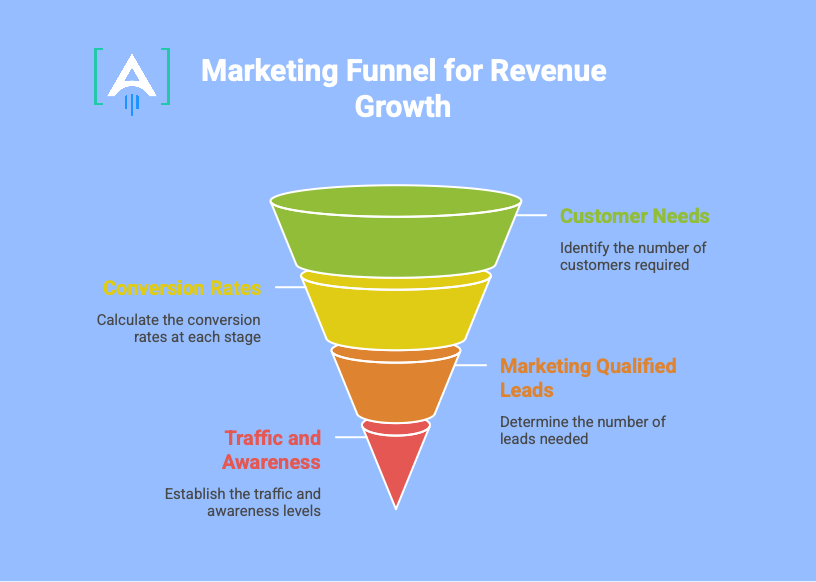
Start with the revenue target and work backward:
- Determine how many customers that requires
- Calculate conversion rates needed at each funnel stage
- Determine marketing qualified leads required
- Establish traffic and awareness levels that support those leads
This reveals whether your current marketing approach can realistically support business goals.
Building Marketing Strategies That Support Business Objectives
List your top strategic priorities based on the business plan:
- Establishing thought leadership in a new category
- Building pipeline for an upcoming product launch
- Expanding awareness in a target market segment
- Improving customer retention to support recurring revenue targets
Each priority should connect directly to a business objective.
Design Multi-Year Campaign Arcs
A three-year business plan calls for three-year marketing initiatives. If your goal is market leadership:
- Year 1: Category education to establish expertise
- Year 2: Competitive differentiation to define your unique position
- Year 3: Market dominance messaging to claim leadership
Allocate Budget Based on Strategic Impact
Review each budget line item and ask how it supports strategic priorities. If it doesn’t, reduce or eliminate it. Redirect resources to initiatives that directly advance business plan objectives.
Organizations now leverage AI marketing capabilities to handle tactical execution while teams focus on strategic alignment.
Integrate With Sales and Product Teams
Marketing cannot align with business strategy in isolation. Establish regular alignment meetings with sales and product leaders to review how marketing strategies support their objectives.
Many organizations implement SEO and link building services to create measurable organic growth that directly supports long-term business objectives.
Creating Measurable Connections Between Marketing and Business Outcomes
Define Leading and Lagging Indicators
Leading indicators measure ultimate outcomes like revenue, market share, or customer acquisition.
Leading indicators predict future performance based on current activities:
- Pipeline velocity
- Content engagement from target accounts
- Brand awareness in new markets
- Qualified leads from strategic segments
Establish Attribution Models
Multi-touch attribution models track all touchpoints in the customer journey, revealing how different initiatives work together to drive revenue.
Create Executive Dashboards
Build dashboards that show progress toward strategic objectives:
- Pipeline generation toward revenue targets
- Market share movement in priority segments
- Brand awareness changes in target markets
- Customer acquisition costs relative to targets
Set Quarterly Checkpoints
Establish quarterly reviews that assess whether marketing strategies still support current business priorities. Market conditions change, competitive threats emerge, and strategic priorities evolve.
Overcoming Common Alignment Challenges
When Business Plans Lack Specificity
Work with executive leadership to add quantified targets, defined timelines, specific market definitions, and measurable success criteria.
When Resources Don’t Match Ambitions
Present the resources required to support stated objectives. Show the gap between current allocation and requirements. Offer scenarios with reduced objectives or phased approaches.
When Multiple Stakeholders Have Competing Priorities
Use the business plan as a tiebreaker. Implement frameworks like signal-based outreach services that address multiple objectives simultaneously.
When Business Plans Change Mid-Cycle
Build flexibility into marketing planning. Some organizations invest in webinar marketing capabilities that can pivot quickly while supporting long-term relationship building.
Maintaining Alignment Over Three Years
Quarterly Business Reviews with executive leadership keep marketing connected to strategic thinking.
Annual Strategy Refresh Sessions assess marketing’s performance against strategic objectives and identify what needs adjustment.
Continuous Team Education helps teams connect their daily work to broader goals. When teams understand why certain initiatives matter strategically, they execute with better judgment.
Documentation and Knowledge Transfer preserves institutional knowledge through leadership transitions.
Moving From Tactical Marketing to Strategic Business Driver
The fundamental shift required is changing how you think about marketing’s role. Marketing isn’t a tactical function that generates leads and creates content—it’s a strategic function that drives business outcomes.
This shift changes everything:
- Instead of asking what campaigns to run, you ask what market position to establish
- Instead of measuring clicks and impressions, you measure progress toward strategic objectives
- Instead of planning quarters, you plan years
Your three-year business plan defines where your company needs to be. Your marketing strategy determines whether you get there.
Partner With Azarian Growth Agency
At Azarian Growth Agency, we help businesses bridge the gap between tactical marketing and strategic growth. Our integrated approach combines SEO services, content marketing, AI marketing, and strategic planning to ensure every marketing initiative supports your long-term business objectives.
Whether you need help aligning existing strategies or building new frameworks that connect marketing to business outcomes, we deliver measurable results that matter to your bottom line.
Stop letting your marketing operate independently from your business plan.
Partner with us to build marketing strategies that drive the outcomes your business needs to achieve its three-year objectives.

