


The modern CEO faces a critical decision that will shape their company’s competitive position in 2025. AI marketing automation tools have evolved from experimental technology into essential business infrastructure. The question is no longer whether to adopt AI, but how deeply to integrate it into your marketing operations.
Today’s business leaders are navigating a landscape where traditional marketing approaches are being replaced by intelligent systems. These systems range from simple prompt-based tools to sophisticated agentic
AI platforms that operate autonomously across multiple channels. The gap between companies using free AI tools and those deploying enterprise automation ecosystems is widening rapidly.
According to HubSpot’s 2024 State of Marketing Report, 54% of marketers already use AI in their work. This rapid adoption reflects a fundamental shift in how businesses approach marketing operations.
This guide examines the fundamental differences between free and paid AI marketing automation.
Why Enterprise AI Delivers CEO-Level Value
Predictability replaces the chaos of manual marketing operations. Workflows execute consistently regardless of team bandwidth or expertise levels. Reduced headcount requirements allow lean teams to compete with much larger organizations.
Lead scoring, enrichment, and CRM routing happen automatically as prospects enter your ecosystem. Automated creative production generates and tests hundreds of variations to identify top performers. SEO and GEO automation ensures content remains optimized for both traditional and AI-powered search.
Operational bottlenecks disappear when AI handles time-consuming tasks that previously required senior talent. Faster go-to-market velocity enables testing and iteration at speeds impossible with manual processes. Revenue optimization runs continuously, identifying opportunities that human teams would miss.
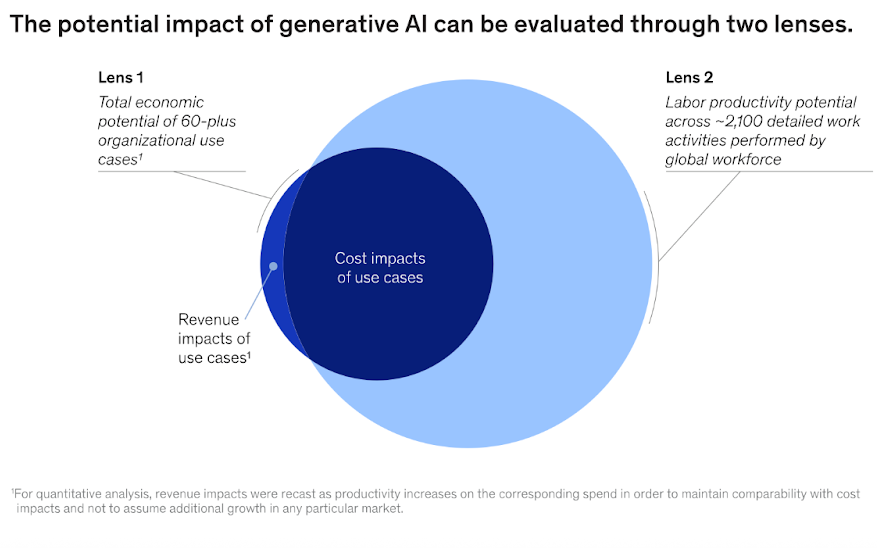
According to McKinsey research, generative AI could add $2.6 trillion to $4.4 trillion annually in value across marketing and sales functions. This value comes primarily from enterprise implementations, not individual prompt engineering.
Comparing Free and Paid Solutions
The differences between free prompt workflows and paid agentic systems extend far beyond cost. Understanding these distinctions helps founders make informed investment decisions.
Critical Marketing Workflows to Automate
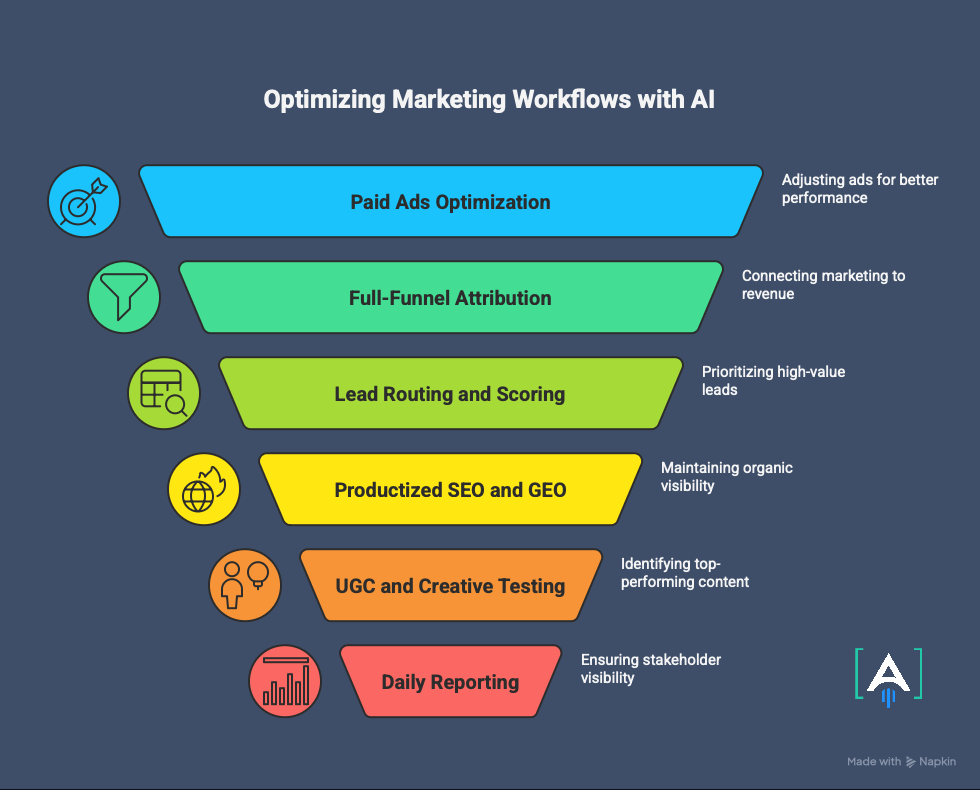
Modern AI marketing automation excels at specific high-value workflows. Understanding which processes deliver maximum ROI helps prioritize implementation efforts.
Paid ads optimization continuously adjusts targeting, creative, and budgets based on real-time performance. Full-funnel attribution connects marketing activities to revenue outcomes. Lead routing and scoring ensure sales teams focus on the highest-value opportunities.
Productized SEO and GEO maintain organic visibility without constant manual optimization. UGC and creative testing loops identify top-performing content variations. Daily reporting eliminates manual data compilation while ensuring stakeholder visibility.
Competitor intelligence tracks market movements and identifies opportunities. Newsletter automation maintains consistent communication without draining resources. CRO experiments run continuously, improving conversion rates over time.
Social media autopublishing maintains presence across platforms without manual posting. Landing page generation creates and tests variations rapidly. Reputation management monitors and responds to customer feedback across channels.
Research from Insider Intelligence indicates that 73% of US marketers use generative AI for content creation, but only a small percentage have integrated it into their broader marketing automation systems. This gap represents the fundamental limitation of prompt-based approaches.
Building Your AI-Native Marketing Stack
Successful AI adoption requires careful tool selection and integration planning. The right stack balances capability, cost, and implementation complexity.
Recommended Tool Categories
Creative generation platforms produce visual and written content at scale. Personalization engines deliver individualized experiences across touchpoints. Attribution systems connect marketing activities to business outcomes clearly.
GEO platforms optimize for AI-powered search and discovery. CRM and pipeline automation tools streamline sales processes. AI agents for marketing operations handle complex workflows autonomously.
Critical Considerations for CEOs
Data security cannot be compromised when implementing AI systems. Evaluate each platform’s security practices and compliance certifications. Team readiness determines implementation speed and success rates. Invest in training before deploying complex systems.
Integration load affects both initial setup and ongoing maintenance. Choose tools that connect easily with your existing infrastructure. Long-term costs include not just subscriptions but also optimization and management resources.
AI governance frameworks ensure ethical, compliant use across your organization. Expected time-to-value helps prioritize implementations based on business impact.
Free vs Paid AI Marketing Automation Platforms
AI marketing automation tools help businesses streamline campaigns, personalize content, analyze customer behavior, and optimize marketing performance using artificial intelligence. The market is divided between free/freemium solutions perfect for startups and small businesses, and paid enterprise platforms designed for large-scale operations.
Free AI Marketing Automation Tools
1. HubSpot Free CRM

Description: HubSpot’s free tier includes AI-powered email marketing, basic automation workflows, contact management, and reporting tools. It’s designed for small businesses and startups getting started with marketing automation.
Pricing: Free tier available; paid plans from $15/month
Pros:
- Comprehensive free tier with essential features
- AI content assistant for emails and social posts
- User-friendly interface with minimal learning curve
- Unlimited contacts and users on free plan
- Integration with Gmail and Outlook
- Email tracking and notifications
- Landing page builder included
- Basic chatbot functionality
Cons:
- HubSpot branding on free tier
- Limited automation workflows (5 per account)
- Advanced AI features require paid plans
- Email send limits (2,000 per month)
- Limited reporting and analytics
- No A/B testing on free tier
- Phone support not included
2. Mailchimp Free
Description: Mailchimp’s free plan offers AI-driven email marketing with basic automation, audience segmentation, and performance insights. It’s one of the most popular entry-level marketing automation platforms.
Pricing: Free tier for up to 500 contacts; paid plans from $13/month
Pros:
- AI-powered send time optimization
- Smart recommendations for content
- Easy-to-use email builder with templates
- Basic automation journeys
- Audience segmentation tools
- Website builder included
- Social media posting tools
- Mobile app for on-the-go management
Cons:
- Limited to 500 contacts on free tier
- 1,000 email sends per month limit
- Mailchimp branding on emails
- Advanced automation requires paid plans
- Limited customer support
- No multivariate testing on free tier
- Phone/chat support not available
3. Brevo (formerly Sendinblue)
Description: Brevo offers a free plan with AI-powered email marketing, SMS, chat, and marketing automation. It’s known for strong deliverability and comprehensive features even on the free tier.
Pricing: Free for unlimited contacts; paid plans from $25/month
Pros:
- Unlimited contacts on free plan
- 300 emails per day on free tier
- AI-driven send time optimization
- Built-in CRM functionality
- SMS and WhatsApp marketing
- Marketing automation workflows
- Transactional email capabilities
- Landing page builder
Cons:
- Daily email send limit (not monthly)
- Brevo branding on free emails
- Advanced automation limited on free tier
- Phone support only on higher tiers
- Some features require technical setup
- AI features more basic than paid plans
Paid AI Marketing Automation Platforms
1. ActiveCampaign
Description: ActiveCampaign combines email marketing, marketing automation, and CRM with advanced AI features including predictive sending, content recommendations, and win probability scoring.
Pricing: Starting at $29/month for 1,000 contacts
Pros:
- Powerful visual automation builder
- Predictive sending and content AI
- Advanced segmentation and personalization
- Built-in CRM with pipeline management
- Split automation for complex workflows
- Machine learning for engagement prediction
- Excellent deliverability rates
- Comprehensive reporting and attribution
- Site tracking and event tracking
- SMS marketing included
Cons:
- Pricing increases significantly with contacts
- Can be complex for beginners
- Some features require higher-tier plans
- Learning curve for advanced automation
- Email builder less modern than competitors
2. Marketo Engage (Adobe)
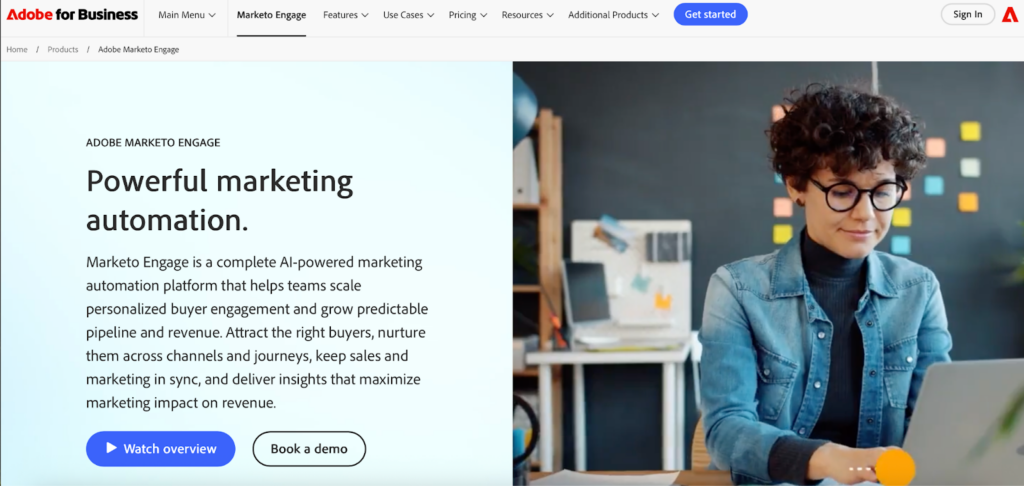
Description: Marketo is Adobe’s enterprise marketing automation platform with sophisticated AI (Adobe Sensei) for predictive audiences, content optimization, and attribution modeling. It’s designed for mid-to-large enterprises.
Pricing: Custom pricing; typically starts around $895/month
Pros:
- Enterprise-grade AI and machine learning
- Sophisticated lead scoring and nurturing
- Advanced attribution modeling
- Seamless Adobe Experience Cloud integration
- Account-based marketing (ABM) capabilities
- Powerful analytics and reporting
- Dedicated customer success manager
- Extensive API and integrations
- Multi-channel campaign orchestration
Cons:
- Very expensive for small businesses
- Steep learning curve
- Requires dedicated admin/specialist
- Implementation can take months
- Contract commitments required
- Overkill for simple campaigns
- Additional costs for advanced features
3. Klaviyo
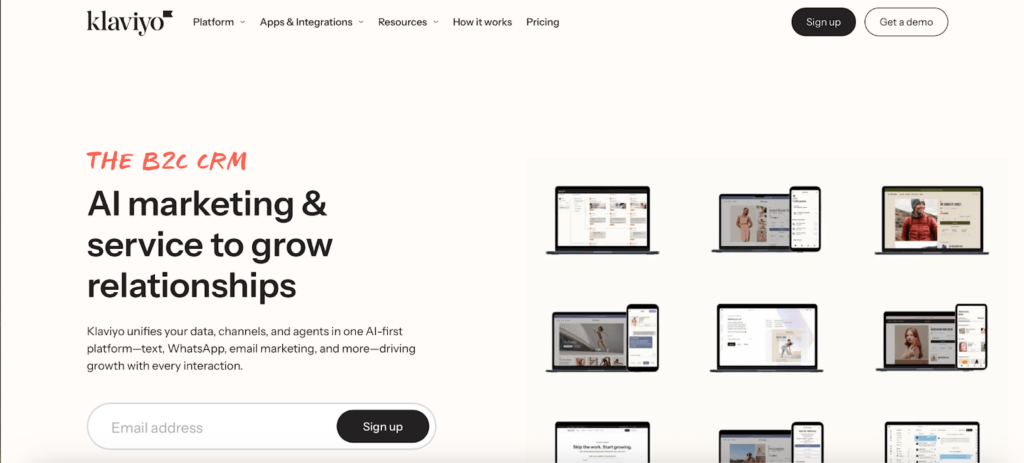
Description: Klaviyo is an AI-powered marketing automation platform specifically designed for e-commerce. It offers predictive analytics, customer lifetime value modeling, and intelligent segmentation for online retailers.
Pricing: Free for up to 250 contacts; paid plans from $45/month
Pros:
- Built specifically for e-commerce
- Predictive analytics for revenue forecasting
- AI-driven product recommendations
- Advanced segmentation based on behavior
- Seamless Shopify/WooCommerce integration
- SMS and email combined flows
- Real-time personalization
- Excellent ROI tracking
- Pre-built e-commerce automation flows
- Strong deliverability
Cons:
- Pricing scales rapidly with contacts
- Can be expensive as you grow
- Learning curve for advanced features
- Primarily focused on e-commerce
- Limited B2B features
- Email builder could be more modern
Prompt Engineering Tools vs Enterprise Agentic Solutions
Prompt engineering tools help marketers craft, optimize, and manage prompts for AI systems like ChatGPT, Claude, and other language models to generate marketing content, analyze data, and automate tasks.
1. AIPRM
Description: AIPRM is a browser extension that provides a curated library of prompt templates for ChatGPT. It includes marketing-specific prompts for SEO, content creation, social media, and campaign planning.
Pricing: Free tier available; Premium at $9/month
Pros:
- Extensive free prompt library
- Category organization (SEO, marketing, sales)
- One-click prompt insertion
- Community-contributed prompts
- Prompt favorites and customization
- Regular updates with new prompts
- Works directly in ChatGPT interface
- Vote and rating system
Cons:
- Limited to ChatGPT only
- Premium needed for advanced features
- Some prompts are overly generic
- Requires Chrome/Edge browser
- Can clutter ChatGPT interface
- Quality control varies
- Privacy considerations with extension
2. PromptPerfect
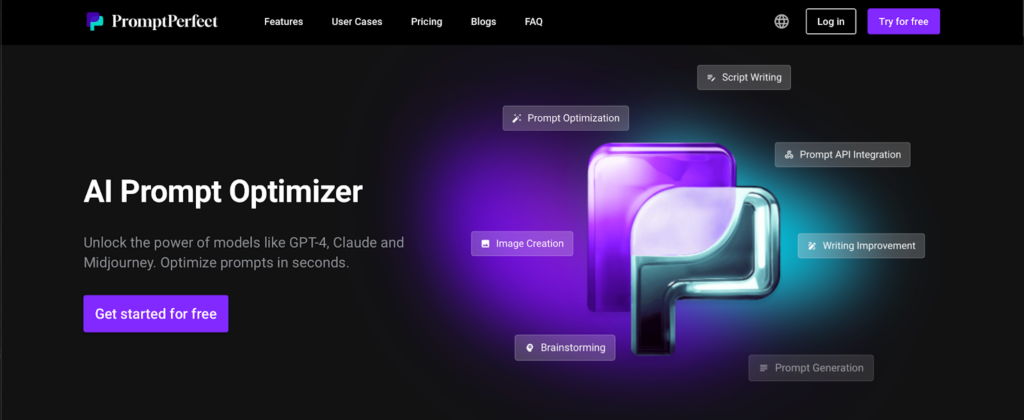
Description: PromptPerfect uses AI to automatically optimize your prompts for better results across multiple AI models. It’s ideal for marketers who want to improve their prompt effectiveness without manual trial and error.
Pricing: Free tier with limits; paid plans from $9.99/month
Pros:
- AI-optimized prompt improvement
- Supports multiple AI models
- Side-by-side comparison of results
- Prompt history and versioning
- Multi-language support
- API access for integration
- Batch optimization available
- Analytics on prompt performance
Cons:
- Learning curve for optimization features
- Free tier has monthly limits
- Requires subscription for heavy use
- Optimization may change prompt intent
- Limited to text-based prompts
- Can over-complicate simple prompts
3. Snack Prompt
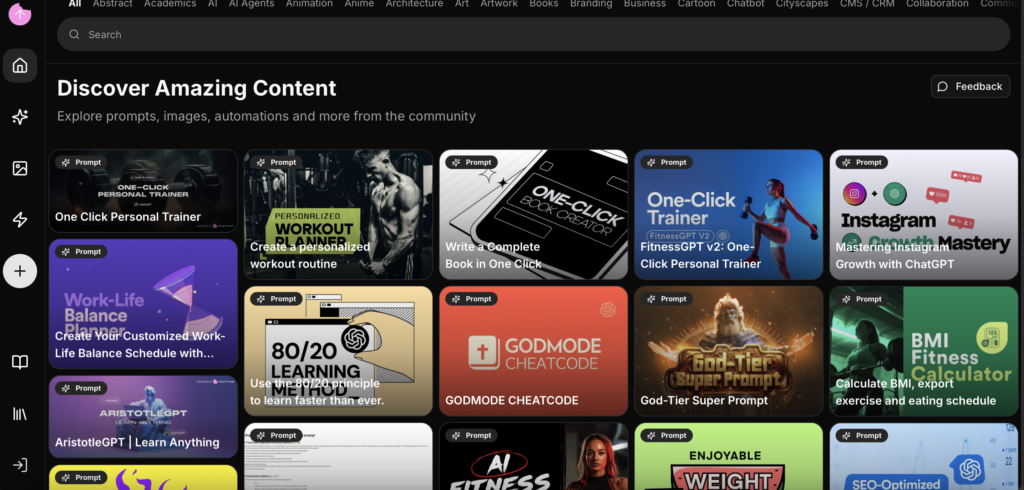
Description: Snack Prompt is a community-driven platform for discovering, sharing, and optimizing AI prompts. It features upvoting, collections, and detailed prompt descriptions for various marketing use cases.
Pricing: Free
Pros:
- Completely free to use
- Community voting system
- Well-organized by category
- Detailed prompt explanations
- Works with multiple AI platforms
- No account required to browse
- Regular community contributions
- Collections for organizing prompts
Cons:
- Smaller library than competitors
- Less sophisticated than paid tools
- No prompt optimization features
- Quality varies significantly
- Limited search functionality
- No enterprise features
- Dependent on community contributions
Enterprise Agentic AI Solutions for Marketing
Enterprise agentic AI solutions use autonomous AI agents that can plan, execute, and optimize entire marketing workflows with minimal human intervention. These systems represent the cutting edge of marketing automation.
1. Jasper for Business
Description: Jasper’s enterprise solution combines AI content generation with brand management, team collaboration, and workflow automation. It uses agentic AI to create multi-channel marketing campaigns aligned with brand guidelines.
Pricing: Custom pricing for enterprise; typically starts at $49/user/month
Pros:
- Brand voice consistency across all content
- Multi-user collaboration with permissions
- Campaign-level content generation
- Integration with marketing stack
- API access for custom workflows
- Analytics and performance tracking
- Chrome extension for in-app use
- Pre-built marketing templates
- SOC 2 Type II compliant
- Dedicated customer success
Cons:
- Expensive for small teams
- Requires onboarding and training
- Content quality needs human review
- Limited to content creation focus
- Annual contracts for enterprise
- Can produce generic content
- Requires clear brand guidelines
2. Persado
Description: Persado uses AI to generate and optimize marketing language at enterprise scale. It’s designed for Fortune 500 companies that need to personalize messaging across millions of customers with measurable performance improvements.
Pricing: Custom enterprise pricing (typically $100K+ annually)
Pros:
- Proven performance improvements (20-40% lift)
- Scientific approach to language optimization
- Integrates with major marketing platforms
- Real-time message personalization
- A/B testing automation
- Industry-specific language models
- Compliance and brand safety controls
- Dedicated implementation team
- Advanced analytics and insights
- Patent-protected technology
Cons:
- Very expensive (enterprise only)
- Long implementation timeline
- Requires significant data volume
- Steep learning curve
- Annual contracts required
- Limited to language optimization
- Best for large-scale campaigns only
3. Drift Conversational AI
Description: Drift’s enterprise platform uses agentic AI to qualify leads, book meetings, and personalize customer interactions at scale through conversational marketing and sales automation across chat, email, and video.
Pricing: Premium tier from $2,500/month; Enterprise custom pricing
Pros:
- Autonomous lead qualification
- 24/7 customer engagement
- Seamless CRM integration (Salesforce)
- Video messaging with AI insights
- Account-based marketing features
- Conversational landing pages
- Real-time visitor intelligence
- Meeting scheduling automation
- Multi-language support
- Advanced analytics and reporting
Cons:
- Premium pricing structure
- Complex implementation
- Requires CRM integration for full value
- Learning curve for team adoption
- Best for B2B companies
- Can feel impersonal if not configured well
- Requires ongoing optimization
Comparison: Prompt Engineering vs Enterprise Agentic Solutions
When to Use Prompt Engineering Tools:
Best For:
- Small to medium businesses with limited budgets
- Teams comfortable with AI tools like ChatGPT or Claude
- Flexible, ad-hoc marketing content needs
- Businesses testing AI capabilities
- Individual marketers or small teams
- Content-focused marketing efforts
Advantages:
- Low cost (often free or under $20/month)
- Flexibility and creative control
- No long-term commitments
- Easy to start using immediately
- Learn while using
- Can produce high-quality results with skill
Limitations:
- Requires human expertise and time
- Manual execution of workflows
- No automation or integration
- Results inconsistent without skill
- Limited scalability
- Labor-intensive for large volumes
The Future of Marketing Belongs to Agentic AI
AI marketing automation tools have evolved from experimental technology to essential business infrastructure. The distinction between free prompt engineering and paid agentic systems represents more than a feature difference. It defines different approaches to competitive positioning and growth velocity.
Building an effective AI marketing ecosystem requires expertise across technology selection, integration, and optimization. The right branding agency partner accelerates this journey while avoiding costly mistakes. Azarian Growth Agency specializes in deploying AI-native marketing systems that deliver measurable business outcomes. Our team combines deep marketing expertise with technical AI implementation capabilities.
Ready to transform your marketing operations with enterprise AI automation? Partner with us to build an agentic marketing system that drives revenue while reducing operational complexity. Let’s discuss how AI can accelerate your growth trajectory.

