


AI marketing analytics tools are revolutionizing how modern businesses measure performance and drive growth. These sophisticated platforms help CEOs and business owners connect advertising spend directly to revenue outcomes. Predictive analytics has shifted from being a luxury to becoming an essential competitive advantage in 2025.
Accurate insights into customer behavior and channel performance enable faster decision-making. Leaders can now identify winning strategies before competitors catch on. Marketing measurement has grown exponentially more complex with privacy changes and fragmented customer journeys.
The AI in data analytics market is projected to reach US$254.50 billion in 2025 and is expected to grow at a compound annual growth rate of 36.89 % between 2025 and 2031, reaching approximately US$1.68 trillion by 2031. The largest market will be the United States, with a projected size of US$46.99 billion in 2025. This rapid growth highlights how essential AI marketing analytics tools and attribution platforms have become for businesses seeking a competitive advantage.
Partnering with a specialized data analytics and reporting agency ensures these complex systems get built and scaled properly. Throughout this comprehensive guide, we’ll compare leading free and paid solutions. You’ll discover which tools work best for companies at different growth stages.
What Are AI Marketing Analytics Tools?
AI marketing analytics tools leverage machine learning to transform raw campaign data into strategic intelligence. These platforms automatically analyze performance patterns across all your marketing channels. They predict future outcomes based on historical trends and current indicators.
Most tools connect directly to advertising platforms like Google Ads and Meta. They also integrate with CRM systems such as Salesforce and HubSpot. Web analytics platforms including Google Analytics feed critical behavioral data into these systems.
The consolidation creates a unified performance view that manual analysis could never achieve. Key capabilities include predictive modeling that forecasts campaign performance with statistical confidence. Multi-touch attribution assigns accurate credit across complex customer journeys with dozens of touchpoints.
Automated anomaly detection alerts teams instantly when metrics deviate from expected patterns. These systems help marketing leaders understand what happened, what will happen, and why. This represents a fundamental shift from backward-looking reporting to forward-thinking strategy.
Free AI Analytics Tools
1. Google Looker Studio

Services: Data visualization, interactive dashboards, cloud-based reporting
Advantages:
- Completely free with Google account access
- Integrates seamlessly with Google ecosystem (Analytics, Ads, Sheets, BigQuery)
- Connects to 800+ data sources through built-in and partner connectors
- Real-time data updates and collaborative sharing capabilities
- No storage or user limits on free tier
- Extensive template library for quick dashboard creation
- Drag-and-drop interface requiring no coding skills
Disadvantages:
- Third-party connector costs can add up quickly (typically $49-99/month per connector)
- Limited advanced analytics features compared to enterprise tools
- Can be resource-intensive with large datasets
- Steeper learning curve for complete beginners
- Less customization for complex data transformations
- Performance issues when handling multiple complex visualizations
Analysis: Looker Studio dominates the free analytics space by offering professional-grade visualization tools without cost barriers. It’s particularly valuable for small to medium businesses already using Google services, though costs can escalate when connecting non-Google platforms.
2. Metabase
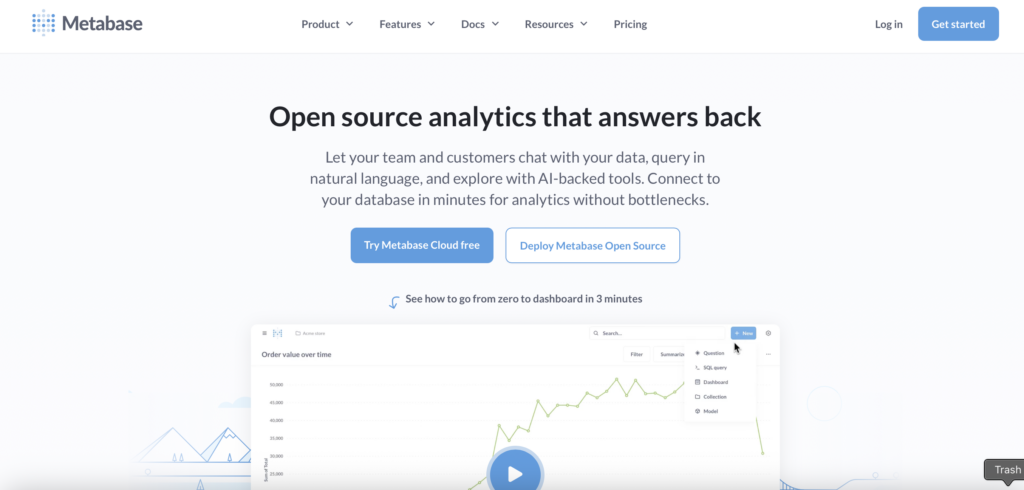
Services: Open-source business intelligence, embedded analytics, no-code query builder
Advantages:
- Completely free self-hosted open-source version
- Natural language query interface for non-technical users
- Visual query builder eliminates SQL requirements
- Self-serve analytics empower teams without data bottlenecks
- Works with all major databases
- Active community support and extensive documentation
- Can be deployed via Docker in minutes
- Model feature simplifies complex data relationships
Disadvantages:
- Self-hosting requires technical setup and maintenance
- Limited advanced AI capabilities in open-source version
- Scaling requires infrastructure management
- Cloud hosting (Metabase Cloud) is paid
- Fewer pre-built connectors than commercial alternatives
- Limited enterprise-grade security features on free tier
Analysis: Metabase excels at democratizing data access within organizations. The open-source model provides exceptional value for teams with technical resources to manage deployment, making sophisticated analytics accessible without licensing fees.
3. Microsoft Power BI Desktop
Services: Data exploration, report authoring, desktop analytics application
Advantages:
- Free desktop application with powerful visualization capabilities
- Connects to 100+ data sources
- Advanced data modeling and DAX formulas
- AI-powered visual analytics and insights
- Integration with Microsoft ecosystem
- Extensive customization options
- Rich library of visualizations and custom visuals
- No user limits for desktop-only use
Disadvantages:
- No sharing or collaboration features (requires paid licenses)
- No cloud publishing capabilities
- No scheduled data refreshes
- Limited to 1GB dataset size
- Cannot create app workspaces
- Reports must be manually distributed
- Requires Pro license ($14/user/month) for team collaboration
Analysis: Power BI Desktop offers enterprise-level analytics capabilities at no cost for individual use. However, its value is significantly limited without paid licenses for sharing and collaboration, making it primarily useful for personal analysis or learning.
4. camelAI

Services: AI-powered data analysis, natural language querying, automated insights
Advantages:
- Free tier available for data exploration
- Natural language interface requires no technical skills
- Automated report generation
- Interactive dashboard creation
- Integrates with popular data sources
- User-friendly design for business users
- Scalable for growing teams
- Reduces time from data to insights
Disadvantages:
- Limited features on free tier
- Newer platform with smaller community
- May require paid tier for advanced analytics
- Integration options more limited than established competitors
- Documentation still developing
- Advanced AI features typically require upgrade
Analysis: camelAI represents the next generation of accessible analytics tools, prioritizing ease of use through conversational interfaces. While promising for democratizing analytics, organizations should evaluate whether the free tier meets their specific needs before committing.
5. Formula Bot
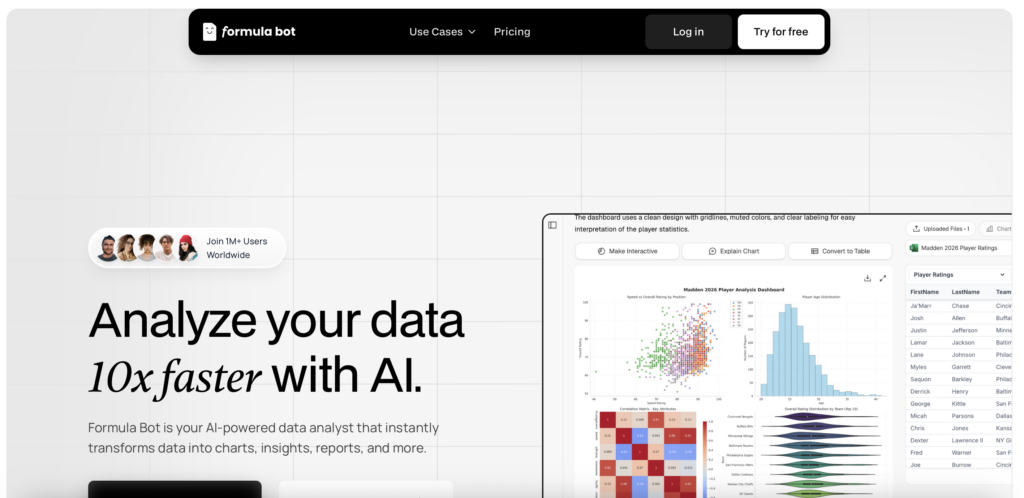
Services: AI data analyst, spreadsheet formula generation, multi-source data analysis
Advantages:
- Started as free Excel formula generator
- Natural language data analysis across multiple sources
- Works with Excel, Google Sheets, Google Analytics, and databases
- Free add-ons for spreadsheet integration
- Qualitative and quantitative analysis capabilities
- Pre-made playbook templates
- Data reshaping and cleaning tools
- Sentiment analysis and text transformation features
Disadvantages:
- Limited to 50 requests on free tier for refund eligibility
- Advanced features require paid subscription
- Newer tool with evolving feature set
- Free tier may have limited data processing capacity
- Not a full-featured BI platform
- Primarily focused on spreadsheet and lighter analytics
Analysis: Formula Bot bridges the gap between spreadsheet work and advanced analytics. The free tier is excellent for individuals and small teams doing spreadsheet-heavy analysis, but scaling to enterprise analytics requires paid plans and likely additional tools.
Paid AI Analytics Tools
1. Tableau

Services: Enterprise analytics platform, visual analytics, data storytelling, agentic analytics
Advantages:
- Industry-leading data visualization capabilities
- Intuitive drag-and-drop interface
- Powerful AI/ML integration for advanced insights
- Handles massive datasets with dedicated infrastructure
- Comprehensive governance and data management
- Native integration with Salesforce CRM
- Deploy cloud, on-premises, or hybrid
- Millions-strong Tableau Community (#DataFam)
- Extensive connector library for all data sources
- Advanced statistical analysis capabilities
Disadvantages:
- Premium pricing (typically thousands per year for teams)
- Steep learning curve for advanced features
- Requires significant training investment
- Can be overkill for simple reporting needs
- Desktop licenses required for content creation
- Performance dependent on data architecture quality
Analysis: Tableau remains the gold standard for enterprise data visualization and analytics. While expensive, it delivers unmatched visual analytics capabilities, robust governance, and scalability that justify the investment for data-driven organizations prioritizing insight quality over cost.
2. ThoughtMetric
Services: E-commerce marketing attribution, campaign performance tracking, multi-touch attribution
Advantages:
- Five different attribution models (first touch, last touch, linear, position-based, multi-touch)
- Simple pricing starting at $99/month for 50,000 pageviews
- All features available at every pricing tier
- Server-side tagging bypasses iOS 14 and ad blocker limitations
- Product-level analytics (SKU tracking)
- Creative performance insights
- Customer journey mapping
- Post-purchase surveys for zero-party data
- E-commerce focused design
Disadvantages:
- Limited to e-commerce use cases
- Not suitable for B2B or long sales cycles
- Pricing scales with pageviews
- Fewer integrations than larger platforms
- Limited enterprise features
- May lack advanced statistical modeling
- Smaller community and support resources
Analysis: ThoughtMetric excels at solving e-commerce attribution challenges with accuracy and simplicity. The straightforward pricing and comprehensive feature access make it excellent value for DTC brands, though B2B organizations should look elsewhere.
3. Triple Whale
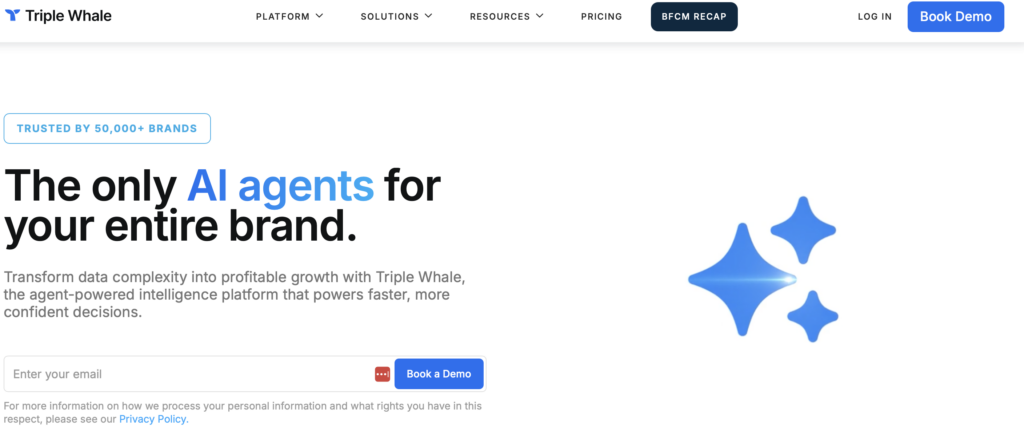
Services: E-commerce analytics, multi-touch attribution, creative analytics, business intelligence
Advantages:
- Unified dashboard for Meta, Google, TikTok, Amazon ads
- Triple Pixel technology for accurate attribution
- Real-time performance tracking across all platforms
- AI assistant (Moby) speeds up analysis
- Creative and product-level insights
- Post-purchase survey integration
- Cohort and subscription analytics
- Media mix modeling (MMM) on higher tiers
- No-code dashboard builder
Disadvantages:
- Starts at $149/month, scaling significantly with features
- Limited to e-commerce businesses
- Advanced features (MMM, SQL) only on expensive tiers
- Not relevant for B2B organizations
- Free version is extremely basic
- Can become expensive quickly with feature additions
Analysis: Triple Whale delivers comprehensive e-commerce analytics in a single platform, eliminating the need to jump between tools. The pricing structure rewards scaling businesses, though early-stage brands may find better value in simpler alternatives.
4. Adobe Marketo Measure
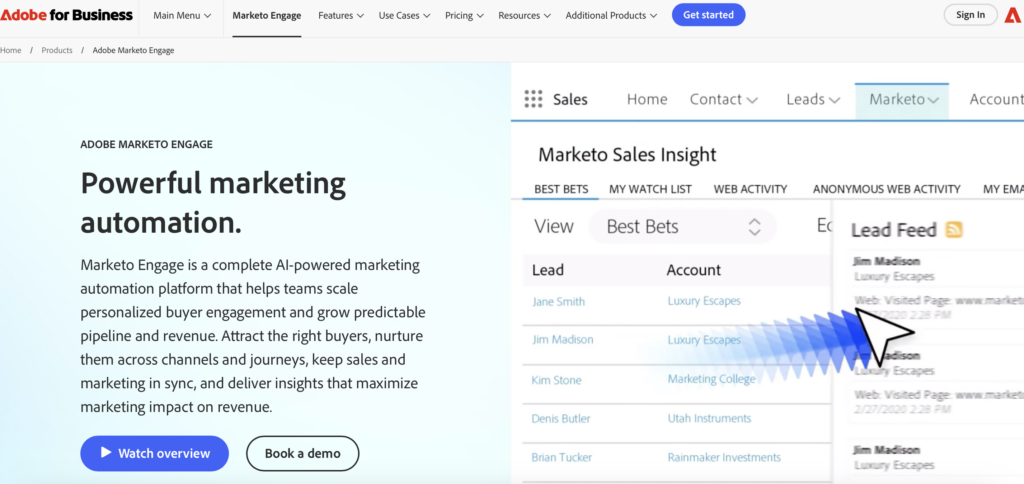
Services: B2B marketing attribution, revenue attribution, multi-touch tracking
Advantages:
- Purpose-built for complex B2B sales cycles
- Tracks multi-stakeholder buyer journeys
- Deep CRM integration (especially Salesforce)
- Unified measurement across all channels
- Machine learning-driven attribution models
- Custom attribution rules
- Integration with Adobe Experience Cloud
- Enterprise-grade security and compliance
- Advanced reporting and analytics
Disadvantages:
- Enterprise pricing (contact for quote, typically very expensive)
- Significant implementation complexity
- Requires technical expertise to configure
- Overkill for small businesses or short sales cycles
- Learning curve is substantial
- Best value only realized with large customer bases
- Requires Adobe ecosystem for maximum benefit
Analysis: Adobe Marketo Measure (formerly Bizible) is designed for enterprise B2B companies with complex, multi-touch customer journeys. The investment only makes sense for large organizations with sophisticated marketing operations and the budget to match.
5. HubSpot Marketing Hub

Services: Marketing automation, attribution reporting, CRM integration, email marketing
Advantages:
- All-in-one marketing, sales, and CRM platform
- Built-in marketing attribution reporting
- Native integration across HubSpot ecosystem
- User-friendly interface requiring minimal training
- Strong email marketing and automation
- Lead tracking and nurturing capabilities
- Comprehensive contact management
- Free CRM tier available
- Extensive app marketplace
- Regular feature updates and improvements
Disadvantages:
- Attribution reporting less customizable than dedicated tools
- Advanced AI analytics features limited
- Can become expensive at higher tiers
- Default contact views need improvement
- Database management tools could be more robust
- Advanced attribution requires Professional tier or higher
- Not as powerful for pure analytics as specialized tools
Analysis: HubSpot excels as a complete marketing platform where attribution is one component of a larger ecosystem. It’s ideal for small to medium businesses seeking an all-in-one solution, though organizations requiring sophisticated attribution modeling may need supplementary tools.
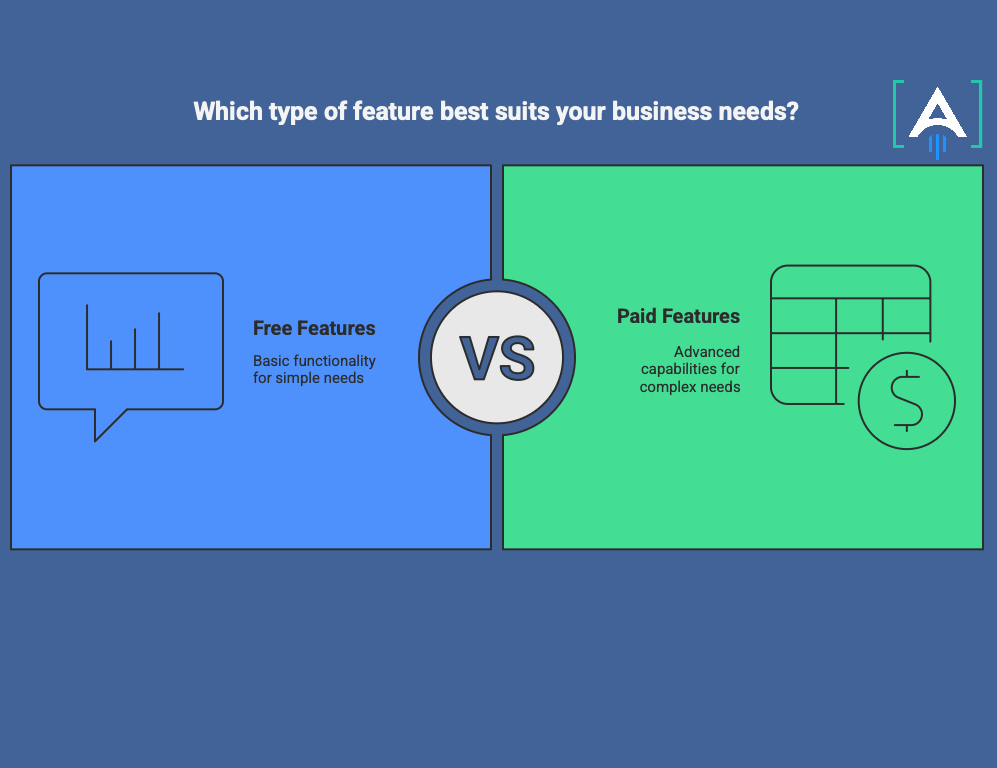
Free Vs Paid Feature Comparison
Attribution Capabilities
Free tools provide basic last-click or first-click attribution models only. Paid platforms offer sophisticated multi-touch attribution including algorithmic and custom models. This difference dramatically impacts understanding of true channel performance.
Dashboard Customization
Free solutions offer limited preset views with minimal configuration options available. Paid platforms provide highly configurable, fully branded dashboards tailored to any need. This flexibility ensures alignment with specific business requirements and reporting structures.
Reporting Automation
Free tools generate simple summary emails with basic performance highlights only. Paid solutions create deep insights with executive commentary and actionable recommendations. The sophistication difference directly impacts decision-making quality and speed.
Data Integration
Free platforms connect to a few sources, often requiring manual data consolidation. Paid solutions integrate seamlessly with dozens of platforms with automated quality checks. This comprehensiveness eliminates blind spots and ensures complete performance visibility.
Predictive Capabilities
Free tools offer basic trend lines showing simple historical patterns forward. Paid platforms provide advanced forecasting with confidence intervals and scenario modeling. This enables strategic planning rather than reactive tactical adjustments.
When Free Tools Meet Your Needs
Early-Stage Founders
Startup founders validating business models benefit from free tools tremendously. These platforms provide basic performance visibility without requiring financial commitment. They help prove concepts before investing in sophisticated analytics infrastructure.
Budget Constraints
Small budgets constrain many businesses, especially during early growth phases. Free tools allow these companies to access basic AI analytics capabilities. This levels the playing field somewhat against larger competitors with bigger budgets.
Simple Data Environments
Companies running only Facebook ads and email marketing don’t need complex systems. Straightforward customer journeys with few touchpoints work fine with basic attribution. A business with limited channel diversity can succeed with free solutions.
When Paid Tools Become Essential
Scaling Advertising Spend
Companies spending beyond a few thousand dollars monthly demand precise attribution accuracy. The cost of paid tools becomes trivial compared to optimization gains. Poor attribution at scale wastes far more than platform subscriptions cost.
Multi-Channel Campaign Complexity
Running simultaneous campaigns across search, social, display, video, and other platforms creates complexity. Understanding how channels work together requires sophisticated modeling capabilities. Free tools cannot handle this analytical depth effectively.
High Data Volume
Multiple products, customer segments, and geographic markets generate enormous data volumes. Free tools get overwhelmed by this complexity and processing requirements. Paid platforms handle scale efficiently with advanced segmentation and filtering.
Executive Reporting Requirements
Board presentations and investor updates demand professional polish and strategic depth. Free options rarely provide the sophistication that high-stakes presentations require. Paid platforms deliver the quality that executive audiences expect.
Key Market Data And Growth Trends
The AI analytics market is experiencing remarkable expansion as businesses recognize strategic value. The AI in data analytics market size was calculated at USD 31.22 billion in 2025 and is predicted to increase from USD 40.30 billion in 2026 to approximately USD 310.97 billion by 2034, expanding at a CAGR of 29.10% from 2025 to 2034.
This explosive growth reflects a fundamental shift toward data-driven decision-making across industries. Companies that adopt AI analytics gain competitive advantages over slower-moving rivals. The investment in these platforms delivers returns through improved marketing efficiency.
Marketing attribution platforms are scaling rapidly alongside the broader AI analytics market. The global marketing attribution software market was valued at USD 4.74 billion in 2024 and is projected to reach USD 10.10 billion by 2030, growing at a compound annual growth rate of 13.6 % from 2025 to 2030. The growth is driven by the increasing adoption of multi-channel marketing strategies, emphasizing the need for advanced attribution tools.This growth indicates attribution is moving from optional to essential for competitive organizations.
The Analytics Gap Most Businesses Face
Many companies suffer from “dashboard blindness” despite collecting extensive performance data. Without AI to synthesize patterns and explain relationships, teams consistently misinterpret trends. The abundance of data paradoxically leads to worse decisions.
Teams often confuse correlation with causation when analyzing metrics manually. They make decisions based on incomplete understanding of complex performance dynamics. The gap between collecting data and knowing what to do widens constantly.
AI helps close this gap by offering causal insights that explain metric movements. Anomaly alerts flag unusual patterns immediately rather than after damage occurs. Predictive explanations forecast future performance with a supporting rationale that teams understand.
Rather than simply showing that conversion rates dropped, AI analytics explain contributing factors. Audience shifts, creative fatigue, or competitive changes get identified automatically. This context transforms raw data into actionable strategic intelligence.
An experienced AI marketing agency can translate insights into growth actions effectively. The gap between “knowing the numbers” and “knowing what to do” is where many businesses struggle. Human expertise in strategic application remains essential for maximum impact.
Making AI Analytics Work For Your Business
Successful implementation requires more than just selecting the right platform. Teams need proper onboarding to understand capabilities and best practices fully. Regular training ensures users maximize value from available features continually.
Data quality matters more than most teams initially realize when implementing analytics. Garbage in creates garbage out, regardless of AI sophistication levels. Invest in data validation and cleaning processes before expecting accurate insights.
Start small with focused use cases that deliver quick wins for stakeholders. Build credibility through early successes before expanding to complex analyses. This approach secures ongoing support and additional resource investment.
Integration with existing workflows ensures analytics insights actually influence decisions. Tools that exist separately from strategy processes get ignored quickly. Make analytics central to planning, execution, and optimization activities.
Conclusion: Choosing Your Analytics Path Forward
AI marketing analytics tools have transformed from optional luxuries into essential competitive requirements. The difference between free and paid platforms boils down to sophistication, scale, and depth. Small businesses can start with free tools to validate value before upgrading.
Quality content marketing and social media marketing strategies depend on accurate analytics. Without proper measurement, even brilliant creative work operates blindly without optimization. AI content optimization requires solid data foundations to deliver results.
Successful branding agency partnerships require a shared understanding of performance metrics. When agencies and clients both see the same clear data, strategic alignment happens naturally. This transparency builds trust and enables faster decision-making.
Azarian Growth Agency specializes in building AI-powered analytics systems that drive measurable growth. We design custom dashboards tailored to your specific KPIs and business model. Our team sets up sophisticated attribution models, revealing true channel performance accurately.
We automate reporting for clarity and growth, freeing your team for strategic work. Our experts combine technical analytics knowledge with strategic marketing expertise effectively. Insights translate into action rather than sitting unused in dashboards.
Partner with us to unlock predictive insights and scale your marketing confidently. We’ll help you move beyond basic reporting to strategic intelligence informing every decision. Together, we’ll build the analytics foundation your business needs for sustainable growth.

